For decades, privileged access was built on a simple belief: guard the credentials, guard the perimeter, and you’ve secured the enterprise. That model worked when identities were human, infrastructure was static, and change moved at the speed of a help-desk ticket.
That world is gone.
Today’s privileged actions come from machine identities, Kubernetes pods, CI/CD pipelines, workloads, and microservices operating at millisecond cadence. Authorization requests now number in the billions, far exceeding human supervision and extending far beyond the intent of traditional PAM and vault-centric controls.
This shift has exposed a silent but systemic flaw in every modern environment:
The Authorization Gap
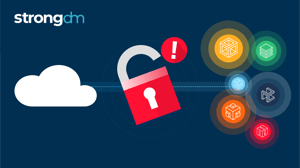
Once an identity, human or machine, logs in with valid credentials, security teams lose real visibility and control. Attackers know this. A single compromised token or secret can grant hours or days of undetected privilege escalation. The distinction between “privileged” and “regular” users collapses the moment a sensitive action is executed.
The traditional model of verifying once and trusting forever is more than just obsolete; it represents a fundamentally flawed architectural approach. To secure the autonomous, machine-driven enterprise, we must move from protecting static secrets to governing every privileged action in real time.
The new mandate for CISOs is clear: Stop trusting the login and start controlling the action.
Introducing Universal Privileged Access Authorization (UPAA)
Today, we are proud to announce Universal Privileged Access Authorization (UPAA), the Authorization Control Plane that finally closes the authorization gap.
UPAA represents an architectural shift, not merely an enhancement to the existing PAM stack. This change is essential for securing a world increasingly defined by automation, ephemeral systems, and machine-to-machine access.
UPAA establishes a single, unified control layer that sits between every identity and every resource. Every command, every API call, every action is evaluated against real-time context, identity state, device posture, workload metadata, environment signals, and policy. Nothing is implicitly trusted. Everything is verified at runtime.
What UPAA Enables
-
Eliminate Systemic Privilege Risk
Runtime Enforcement
Standing privilege disappears. Every action is re-authorized continuously, and risky sessions are terminated instantly, closing the breach window before damage occurs.
-
Unify Access Architecture
Single Control Plane
One policy framework governs all identities, human, machine, and agent, across cloud, on-prem, Kubernetes, legacy systems, and hybrid environments.
No more tool sprawl. No “Legacy Access Tax.”
-
Accelerate Enterprise Velocity
Credential-Free & Zero Standing Privilege by Design
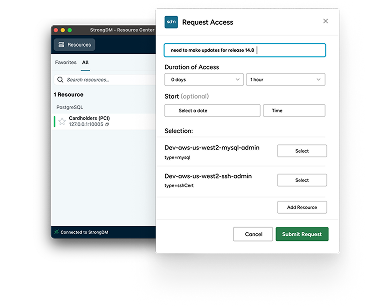
Static secrets are replaced with dynamic, ephemeral entitlements. Access that once took hours or days collapses to minutes, without bypassing security.
UPAA is identity-agnostic. Vault-agnostic. Cloud-agnostic.
It modernizes access without forcing a disruptive rip-and-replace.
UPAA is the enforcement layer the modern enterprise has been missing.
Why Now
The fundamental assumptions behind yesterday's firewall and vault security architectures are obsolete; they cannot defend against today's machine-speed threats. Legacy access controls have been outpaced by automation. The critical question is whether your organization will adapt to this reality before attackers exploit the resulting gap.
UPAA empowers enterprises to scale securely, govern automation with assurance, and enforce Zero Standing Privilege—all without impeding innovation. The era of "verify once, trust forever" is finished. The future of security is real-time authorization.
See UPAA in Action
Ready to transform access from a systemic risk into a strategic advantage?
- Meet Us Live
See UPAA at the Gartner IAM Summit, December 8–10, Booth 127.
- View On-demand
Explore UPAA, the future of secure, real-time, access control.
- Watch the Explainer Video
Get the two-minute executive overview of the Authorization Control Plane.
- Read the White Paper
From Vault to Runtime Authorization: Rethinking Privileged Access for Modern Infrastructure.
- Read our UPAA One Pager
Continuous, policy-based controls that leverage actions and context to enhance enterprise security.